
Barking Up the Wrong Tree: When It’s Time to Rethink Your Career Direction
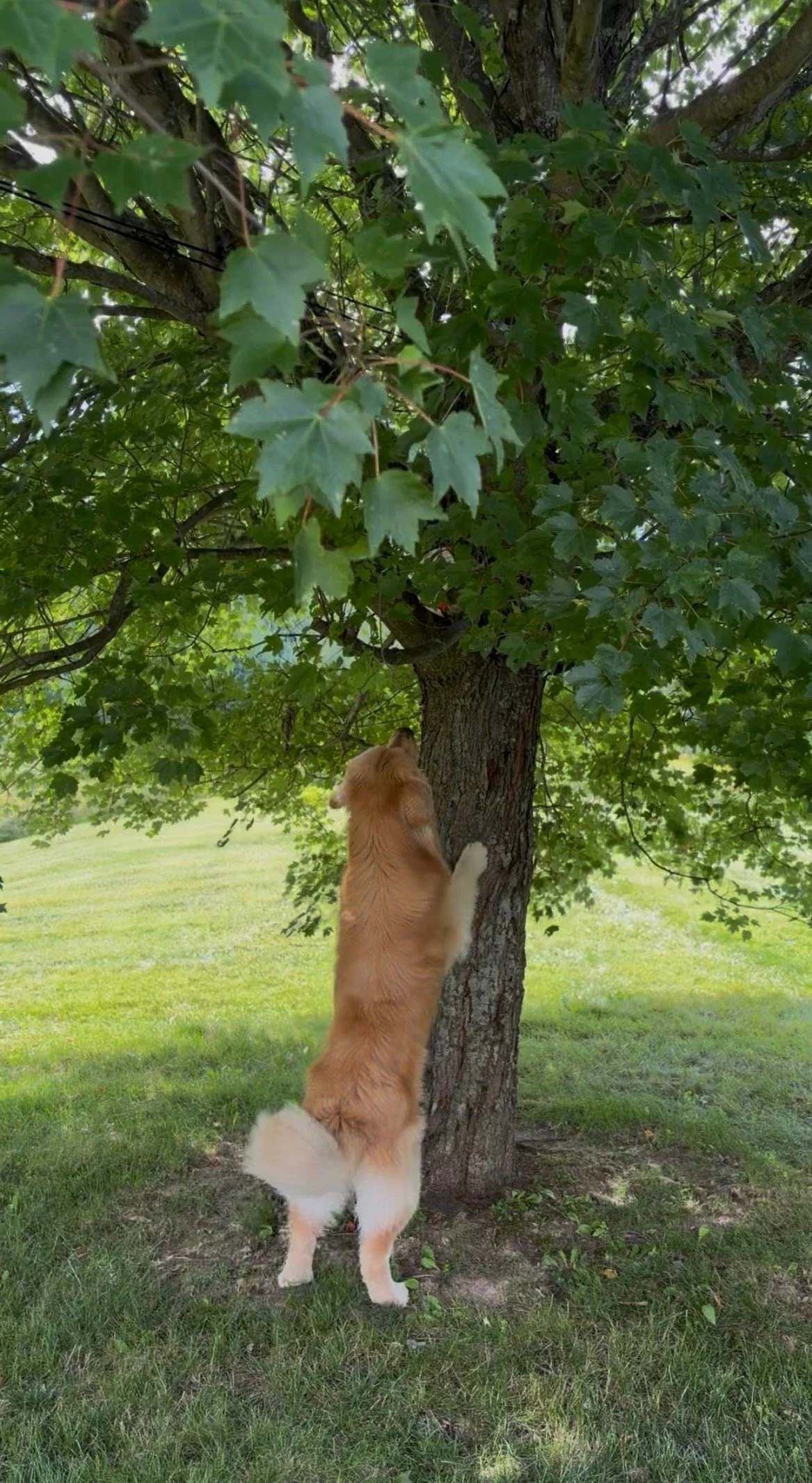
Dog barking at a tree
One recent morning on a walk, surrounded by trees, I found myself reflecting on the expression "barking up the wrong tree." The more I considered it, the more I realized how well it applies to our careers.
And how do we decide when to stop barking up a particular tree?
When Persistence Becomes a Trap
In a career transition, you have an idea about what comes next. You pursue it. You invest time, energy, relationships, money - and a lot of sweat equity. Maybe even earn another degree.
Then, somewhere along the way, you begin to wonder: Is this the right path for me?
Somewhere along the journey of a career transition, it is easy to get caught up in this inner dialogue. It sounds like: Perhaps this will feel easier if I just keep forging ahead. Maybe if I work harder, try something slightly different, or give it more time to evolve, I'll eventually make this work. It’s hard to ignore what may have started as a whisper of doubt and has now grown to an inner narrative that won’t quit.
The more we've invested in something, the harder it can be to consider that it may not be working. Here’s the trap. Are we demonstrating persistence - or simply resisting the possibility that we've chosen the wrong direction? Persistence is a strength - until it isn't.
It makes me think of the proverb: if at first you don’t succeed, try - try - again. Persistence is usually celebrated: grit, determination, resilience. Don't give up. Keep going.
When More Effort Isn’t the Answer
It’s all good advice - unless the problem has nothing to do with insufficient effort. Sometimes the issue is that we're solving the wrong problem or pursuing the wrong direction.
That's a particularly important distinction in a career transition: knowing when it's time to pause, stop, take stock, and ask whether the direction still makes sense.
A Different Way to Get Unstuck
One of my go-to problem-solving models is ADIME. I learned it years ago when teaching and still use it today when working with clients. The value isn't in the acronym itself. It's in the discipline of pausing before jumping to the next solution.
Here's what that process might look like in practice:
A (Assessment): A successful mid-career tech professional feels burned out by remote work and disconnected from the impact of her job.
D (Diagnosis): Her work no longer aligns with her values or need for meaningful contribution.
I (Intervention): She explores B Corp organizations, researches their missions, and begins reaching out to people working in the sector.
M (Monitoring): She tracks networking conversations, insights gained, and how energized she feels as she learns more about purpose-driven organizations. One conversation with an employee at a B Corp sparks particular interest.
E (Evaluation): The exploration confirms that impact-focused work is worth pursuing further, giving her greater confidence in redirecting her career search.
Changing Direction Isn’t Failure
One of the places I see people get stuck during a career transition is accepting that changing direction isn't failure. A direction that seemed right six months ago may not seem right now.
The goal isn't to prove that your original decision was right. The goal is to figure out what makes sense now.
Back to the tree. Maybe the lesson isn't to avoid barking up the wrong tree. Maybe the lesson is learning to recognize when it's time to stop barking, step back, look around, and choose another tree.
What helps you recognize when it's time to keep going... and when it's time to choose a different tree?